Article Overview
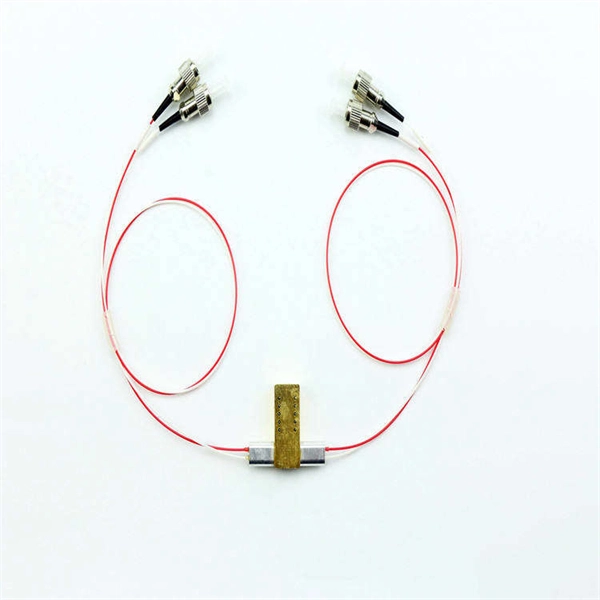
A wavelength division multiplexer (WDM) combines multiple optical signals of different wavelengths onto a single fiber and separates them at the receiving end, enabling simultaneous transmission of multiple data channels over one fiber.
Function of a WDM
A wavelength division multiplexer (MUX) is used in fiber-optic communication to combine multiple optical signals, each at a distinct wavelength, into a single optical fiber. This allows multiple independent data streams to travel simultaneously without interference, effectively multiplying the fiber's data-carrying capacity and making more efficient use of the existing infrastructure . At the receiving end, a demultiplexer (DEMUX) separates the combined signals back into their original wavelengths for processing .
How It Works
- Each data stream is converted into pulses of laser light at a specific wavelength.
- The MUX combines these wavelengths into a single composite beam transmitted through the fiber.
- At the destination, the DEMUX uses optical filters or devices like arrayed waveguide gratings to separate the wavelengths, directing each to its corresponding receiver .
- This process is analogous to a prism splitting white light into its constituent colors, but applied to data-carrying laser signals.
Types of WDM
- Coarse Wavelength Division Multiplexing (CWDM): Uses fewer channels with wider spacing (typically 20 nm apart) for short-range communications, cost-effective and simpler to implement .
- Dense Wavelength Division Multiplexing (DWDM): Uses many closely spaced channels (e.g., 40 or more) for high-capacity, long-distance transmission, such as Internet backbones, often requiring amplification and dispersion compensation .
Advantages
- Increases fiber capacity without laying additional fibers.
- Supports simultaneous bidirectional communication over a single fiber.
- Enables scalable network upgrades, as new wavelengths can be added without replacing existing infrastructure.
- Works with optical amplifiers like EDFAs to boost multiple channels simultaneously, further extending transmission distance . In summary, a wavelength division multiplexer is a key device in modern optical networks, allowing multiple data channels to share a single fiber efficiently, reducing costs, and supporting high-speed, high-capacity communication.
What is Wavelength Division Multiplexing (WDM)?
Wavelength Division Multiplexing (WDM) enables the combining of multiple individual light signals onto a single optical
What is WDM : Wavelength Division Multiplexing Advantages and
Wavelength Division Multiplexing (WDM) is an optical communication technique that transmits multiple data channels through a

Optically Multiplexed Systems: Wavelength Division Multiplexing
This ushered in the need of multiplexers, specifically wavelength division multiplexers. A few popular optical
Wavelength-Division Multiplexing
Wavelength-division multiplexing (WDM) is defined as a technology that multiplexes multiple optical carrier signals onto an optical
Wavelength-Division Multiplexing
Wavelength-division multiplexing (WDM), increases the information-carrying capacity of a fiber by assigning multiple incoming optical
Wavelength Division Multiplexing
Wavelength Division Multiplexing (WDM) is defined as a multiplexing technology used in fiber-optic transmission to maximize
A Review of WDM Technology and Applications
The rapid growth in demand for high-capacity telecommunication links, and the speed limitation of single-wavelength
Wavelength Division Multiplexing (WDM) | Springer Nature Link
Wavelength division multiplexing or WDM allows the combining of a number of independent information-carrying
Wavelength Division Multiplexing
Wavelength division multiplexing (WDM) is a technique of multiplexing multiple optical carrier signals through a single optical fiber
Wavelength Division Multiplexers (WDM) Selection Guide
How To Select Wavelength Division Multiplexers Image Credit: Microwave Photonic Systems Inc. Wavelength division multiplexers
Wavelength-Division Multiplexing
Wavelength Division Multiplexing (WDM) is defined as a technology in optical networks that enables the transmission of multiple
Wavelength Division Multiplexers (WDM)
Wavelength Division Multiplexing (WDM) is a technique in fiber-optic communication systems that enables multiple optical signals
Wavelength Division Multiplexing
Wavelength division multiplexing (WDM) is a technology for increasing the transmission capacity of optical
WDM 101 | Optical Communications | Corning
WDM Multiplexers and Demultiplexers combine and separate different wavelengths (colors) of light signals on a common fiber
How Wavelength Division Multiplexing (WDM) Works
Discover how Wavelength Division Multiplexing (WDM) uses light to exponentially increase data transmission capacity
WDM Basics: Understanding Wavelength Division Multiplexing
WDM (Wavelength Division Multiplexing) technology is an ideal solution to get more bandwidth and lower cost in
High-Performance Wavelength Division
Here, we develop a novel design approach that co-optimizes inverse-designed wavelength division multiplexers and distributed
Wavelength Division Multiplexing Introduction Guide
C Low Band High band CWDM channels, 20nm spaced apart Wavelength Division Multiplexing (WDM) Introduction Guide A
Introduction To WDM | part of Wavelength Division Multiplexing: A
This introductory chapter of <i>Wavelength Division Multiplexing: A Practical Engineering Guide</i> traces the history of wavelength
Wavelength division multiplexing
This section contains examples of wavelength division multiplexing (WDM) circuits. Wavelength division multiplexing is a method of
Introduction To WDM
Summary This introductory chapter of Wavelength Division Multiplexing: A Practical Engineering Guide traces the history of
Wavelength-Division Multiplexing (WDM)
WDM increases transmission capacity per fiber WDM is an abbreviation for Wavelength-Division Multiplexing, and is

Wavelength-division multiplexing
This technique enables bidirectional communications over a single strand of fiber (also called wavelength
How Wavelength Division Multiplexing (WDM) Works
Each data stream is first converted into pulses of laser light, with each stream assigned a unique, precise wavelength,
What is Wavelength Division Multiplexing (WDM): A
Introduction to Wavelength Division Multiplexing (WDM) Wavelength Division Multiplexing
Wavelength Division Multiplexing (WDM)
Wavelength Division Multiplexing (WDM) Abstract Wavelength division multiplexing or WDM allows the combining of a number of
Related Resources
- Dominica Comoros Communication Tower
- Albanian Fiber Optic Junction Box Company
- Can Xiaomi routers be used with fiber optic cables
- Ranking of European Distribution Box Suppliers
- Principle of Optical Module Transmission Section
- Which model of concealed electrical control box is recommended
- Can optical fiber cables be pulled using a winch
- Integrated UPS Power Supply Direct Sales
- National Standards for Direct-Buried Optical Cables
- Quotation for Low-Voltage Electrical Complete Sets of Equipment
- Canada Sealed Fireproof Cable Tray Manufacturer
- Wholesale Price List for Optical Cable Splice Packages
- How much does it cost to install cable trays labor only
- Outdoor Multimode Optical Cable Armor
- Optical Module Communication Section
- Night-reflective blank electrical box sticker
- Domestic Substitution Technology for Silicon Photonics CPO
- Kazakhstan Delivery Time Cold Aisle IP65
- Should cables be laid in cable trays
- Fiber optic cable attached to power transmission tower
- Sierra Leone Mobile Fiber Optic Cable Installation Price
- Fiji cable trays offer high cost-performance
- Nepal Monitoring Distribution Box
- EU High Voltage Busbar Bridge
- Single-fiber bidirectional NRZ specifications and models
- Yemen Plastic Distribution Box Specifications
- Standard steel profile for complete electrical distribution box foundation
- How to install the electrical distribution box on the staircase at the entrance